Fungi
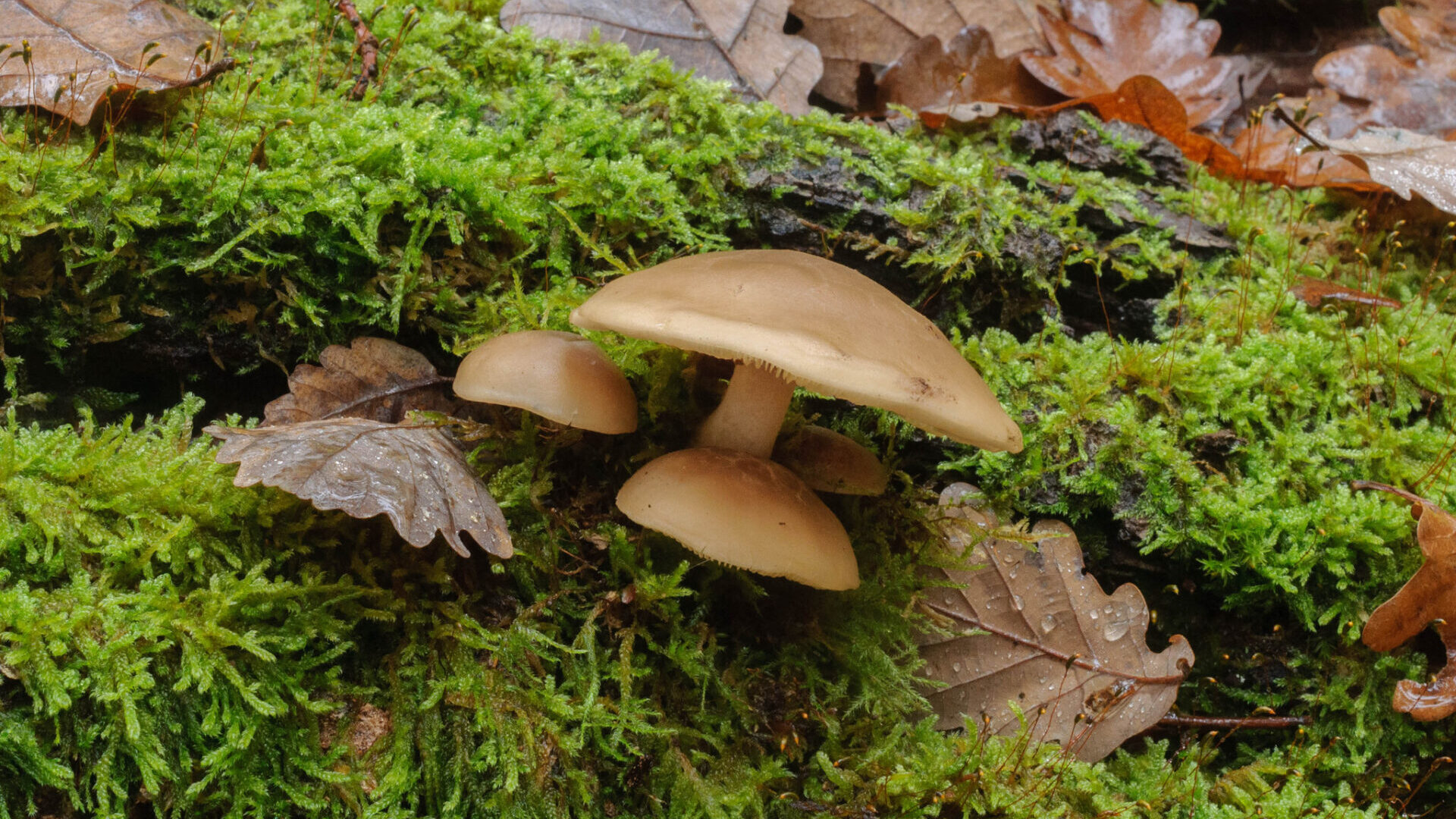
Hypsizygus tessulatus
| Kingdom | Fungi |
|---|---|
| Phylum | Basidiomycota |
| Class | Agaricomycetes |
| Order | Agaricales |
| Family | Lyophyllaceae |
| Genus | Hypsizygus |
| Species | Hypsizygus tessulatus |
Key metrics will appear once data is available.
Hypsizygus tessulatus, commonly known as the beech mushroom, is a wood-decay fungus that plays a vital ecological role as a decomposer in temperate and boreal forests. This basidiomycete breaks down dead wood and woody debris, returning nutrients to the soil and facilitating nutrient cycling in forest ecosystems. The species thrives in cool climates across the Northern Hemisphere and has become increasingly common in cultivation.
The beech mushroom is a small to medium-sized fungus with distinctive characteristics that make it recognizable in the field. The cap is typically whitish to pale gray, often with a slightly tessellated or checkered appearance—a feature reflected in its scientific name tessulatus, meaning “checkered.” The surface may appear somewhat wrinkled or ridged, and the cap diameter usually ranges from 2–5 cm at maturity.
The gills are white to off-white and run nearly to the stalk attachment, with shorter gills interspersed among the longer ones. The stalk is cylindrical, white, and relatively slender, often with a slight bulbous base. The flesh is white throughout and has a mild, pleasant odor.
Like other wood-decay fungi, H. tessulatus produces fruiting bodies in response to moisture and appropriate temperature conditions. The species is saprobic, meaning it feeds on dead wood and organic matter rather than living tissue. Fruiting typically occurs in autumn, though the exact timing depends on local climate and substrate moisture.
The fungus produces spores from its gills, which disperse via air currents to colonize new wood substrates. Once spores land on suitable decaying wood, they germinate and the mycelium grows through the substrate, breaking down complex polymers and gradually decomposing the wood.
iNaturalist data indicates that H. tessulatus has a wide distribution across North America and Europe. GBIF records show the species occurring in Canada, the United States, Finland, Norway, Estonia, Poland, Italy, Latvia, the United Kingdom, Germany, Hungary, France, Mexico, Belarus, Slovakia, Austria, Czechia, Spain, the Netherlands, Sweden, and the Russian Federation. The species has been documented from over 1,000 occurrence records across these regions.
The fungus grows on decaying hardwood, particularly on fallen logs, stumps, and woody debris in mixed and deciduous forests. It prefers cool, moist environments and is often found in shaded woodland areas. The species is particularly common in northern temperate regions where moisture levels remain high throughout much of the year.
As a saprobic fungus, H. tessulatus is a primary decomposer of dead wood in forest ecosystems. It colonizes woody substrates that have already begun to decay, breaking down cellulose, hemicellulose, and lignin through enzymatic action. This process is essential for nutrient cycling, as it converts complex organic compounds into forms that soil organisms and plants can utilize.
The fungus also plays a role in providing habitat and food for other organisms. Insects, mites, and other arthropods feed on the fungal mycelium and fruiting bodies, and the decaying wood colonized by the fungus becomes habitat for numerous invertebrates. In this way, H. tessulatus contributes to the broader food web and biodiversity of forest ecosystems.
The beech mushroom is edible and has been consumed in some regions, though it is not widely documented as a culinary species in scientific literature. When preparing any wild mushroom for consumption, proper identification is essential to avoid confusion with inedible or toxic look-alikes. The mushroom has a mild flavor and firm texture, making it suitable for cooking if correctly identified and properly prepared.
In some areas, the species has been cultivated for food production, though commercial cultivation is limited compared to other edible fungi. The mushroom should be thoroughly cooked before consumption, as with most wild fungi.
Several white to pale-capped fungi in the family Lyophyllaceae and related groups may resemble H. tessulatus in the field. The distinctive tessellated cap surface is a key identifying feature, though this pattern may be subtle or worn away in older specimens. The nearly white gills, small stature, and growth on woody substrates help distinguish it from larger white mushrooms such as Agaricus species, which typically grow on soil rather than wood.
Without microscopic examination or detailed comparison with reference specimens, field identification can be challenging. Spore color, gill attachment, and cap texture should all be carefully observed. When in doubt, mushrooms should not be consumed.
No formal conservation status has been assigned to H. tessulatus by the IUCN or other major conservation bodies. The species appears to be stable and widespread across its range, with no documented threats to its survival.
The fungus benefits from the presence of dead wood in forests, which is increasingly recognized as important for forest biodiversity and ecosystem function. Forest management practices that retain dead wood and woody debris support populations of this and other wood-decay fungi.