Fungi
Cortinarius lebretonii
| Kingdom | Fungi |
|---|---|
| Phylum | Basidiomycota |
| Class | Agaricomycetes |
| Order | Agaricales |
| Family | Cortinariaceae |
| Genus | Cortinarius |
| Species | Cortinarius lebretonii |
Key metrics will appear once data is available.
Cortinarius lebretonii is a mycorrhizal fungus belonging to the family Cortinariaceae, a group of fungi that form symbiotic relationships with tree roots across temperate forests in Europe and North America. Like other members of the genus Cortinarius, this species plays a crucial role in forest ecosystems by facilitating nutrient exchange between soil and host plants. The fungus produces fruiting bodies that emerge seasonally, dispersing spores to establish new mycorrhizal associations with suitable tree partners.
This cortinarius species is distributed across a wide range of European countries and has been recorded in the United States. GBIF records show occurrences in Norway, Sweden, France, Italy, the Russian Federation, Switzerland, Germany, Czechia, Poland, Türkiye, Georgia, Spain, Austria, Denmark, Croatia, and Slovenia, with a total of 319 documented occurrences. The species appears to favor temperate and boreal forest regions, with the highest concentration of records in Scandinavia and western Europe.
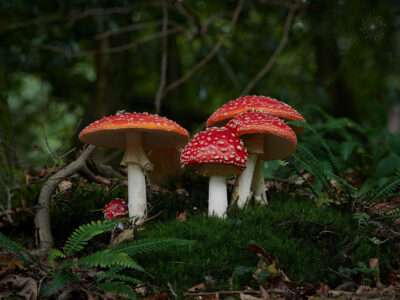
Cortinarius lebretonii exhibits the characteristic morphology typical of the genus Cortinarius. The fruiting body consists of a cap, gills, and a distinctive stipe. The cortina—a cobweb-like partial veil connecting the cap margin to the stipe—is a defining feature of the genus and may leave a ring-like zone or scattered fibrils on the stipe as the fruiting body matures.
The species produces fruiting bodies with a characteristic appearance that aids in field identification. Key features include the gill attachment, color patterns, and the presence of the cortina in young specimens. The stipe typically displays remnants of the cortina, which may appear as a distinct zone or scattered fibrils.
Microscopic examination of spore prints and gill structure would be necessary for definitive identification, as several Cortinarius species share similar macroscopic features. Spore morphology and color characteristics are essential for confirming the identity of C. lebretonii in herbarium or laboratory settings.
Like all mycorrhizal fungi, Cortinarius lebretonii completes its life cycle through underground mycelial growth and periodic fruiting body production. The mycelium colonizes the root systems of host trees, forming the mycorrhizal association that defines the ecological relationship. Fruiting bodies emerge when environmental conditions—particularly moisture and temperature—are favorable.
iNaturalist data indicates recent observations spanning from September through November, suggesting an autumn fruiting season typical of many temperate forest fungi. The timing of fruiting body emergence is closely tied to seasonal rainfall patterns and temperature fluctuations. Spore maturation and dispersal occur as the fruiting body develops, with mature spores released into the air to colonize new root systems.
The fungus relies on its host tree for carbohydrates produced through photosynthesis, while the tree benefits from the enhanced nutrient absorption provided by the extensive mycelial network. This mutualistic relationship persists throughout the growing season, with fruiting bodies representing the sexual reproductive stage of the fungus.
GBIF records show Cortinarius lebretonii is widely distributed across temperate and boreal Europe, with its range extending from Scandinavia in the north to the Mediterranean region in the south. The species occurs in Norway, Sweden, France, Italy, the Russian Federation, Switzerland, Germany, Czechia, Poland, Türkiye, Georgia, Spain, Austria, Denmark, Croatia, and Slovenia. A single record from the United States of America indicates the species also occurs in North America, though documentation there is limited.
The species appears to favor mixed and coniferous forests across its range. The concentration of records in Scandinavia and Central Europe suggests the fungus thrives in regions with cool, moist climates and well-established forest ecosystems. The mycorrhizal associations likely involve common European tree species such as spruce, fir, and beech.
The wide geographic distribution across diverse European forest types indicates C. lebretonii is a generalist mycorrhizal partner capable of forming associations with multiple tree species across varying soil and climate conditions. The species persists in both pristine forests and managed woodland habitats where suitable host trees remain present.
Cortinarius lebretonii functions as a mycorrhizal fungus, forming symbiotic associations with tree roots that enhance nutrient uptake for the host plant. The extensive mycelial network extends far beyond the root surface, accessing soil nutrients—particularly nitrogen and phosphorus—that would otherwise remain unavailable to the tree. In return, the fungus receives carbohydrates from the tree’s photosynthetic production.
This mycorrhizal relationship supports forest productivity and nutrient cycling. By facilitating nutrient transfer from soil to plants, C. lebretonii contributes to the overall health and vigor of forest ecosystems. The fruiting bodies produced by the fungus serve as food sources for invertebrates and small mammals, further integrating the species into broader food webs within forest communities.
Little documented information is available regarding the edibility or culinary use of Cortinarius lebretonii. Many Cortinarius species are toxic or of unknown edibility status, and consumption of wild fungi should only occur after expert identification and verification of safety. The species should not be collected for consumption without definitive identification by a qualified mycologist.
Some Cortinarius species contain compounds that can cause gastrointestinal distress or more serious toxicity in humans. Without specific toxicological data for C. lebretonii, caution is strongly advised. The ecological value of the species as a mycorrhizal partner far outweighs any potential culinary use, and preservation of fruiting bodies in their natural habitat supports forest health.
Several Cortinarius species share morphological similarities with C. lebretonii, making field identification challenging without careful observation of multiple features. Other cortinarius species with similar cap and gill characteristics may occur in overlapping geographic ranges and habitats. Distinguishing features such as cap color, gill spacing, cortina persistence, and stipe characteristics are essential for accurate identification.
Microscopic examination of spore morphology and color is often necessary to definitively separate C. lebretonii from closely related taxa. Consultation with regional mycological guides and comparison with verified herbarium specimens is recommended for confident identification in the field.
No formal conservation status has been assigned to Cortinarius lebretonii by major conservation authorities. The wide geographic distribution and occurrence across multiple forest types suggest the species is not currently at risk of extinction. The preservation of mature forest ecosystems with suitable mycorrhizal host trees is essential for maintaining populations of this and other forest fungi.
Forest management practices that maintain structural diversity and avoid excessive disturbance support the persistence of mycorrhizal fungal communities. The species benefits from conservation efforts targeting old-growth forests and mixed woodland habitats where complex fungal communities are established.