
Fungi
The African lion is the only truly social cat on Earth, an apex predator whose roar can be heard from five kilometers away. These magnificent felines have captivated human imagination for millennia, appearing in art, mythology, and folklore across cultures. Yet today, wild lion populations face unprecedented pressures, with their numbers declining dramatically across their African range and a tiny population clinging to survival in India’s Gir Forest.
The African lion is unmistakable among Africa’s carnivores. Males are substantially larger than females, with adults weighing between 160 and 188 kilograms, while females typically range from 110 to 150 kilograms. Both sexes display tawny, golden, or reddish-brown coats that vary geographically, with some populations showing darker coloration than others.
The male’s iconic mane is his most striking feature—a thick collar of long hair extending from the head down the neck and shoulders. Mane color ranges from blonde to almost black, and darker, fuller manes typically indicate a healthier, more dominant individual. The mane serves multiple purposes: it intimidates rivals, attracts females, and protects the neck during fights. Females lack manes entirely, instead displaying a sleeker profile with muscular, compact builds perfectly suited for hunting.
Both sexes possess powerful builds with robust shoulders and hindquarters, relatively short legs, and a long tail tipped with a dark tuft. Their eyes are large and forward-facing, providing excellent binocular vision for hunting. The whiskers and nose pads are highly sensitive, helping them navigate and hunt in low-light conditions.
Lions are the most social of all wild cats, living in groups called prides that typically consist of 5 to 15 related females, their cubs, and 1 to 4 adult males. This cooperative lifestyle is unique among felids and fundamentally shapes their behavior and ecology. Within the pride, females form the stable core, remaining together for life, while males are transient, joining prides through fierce battles and remaining for only a few years before being displaced.
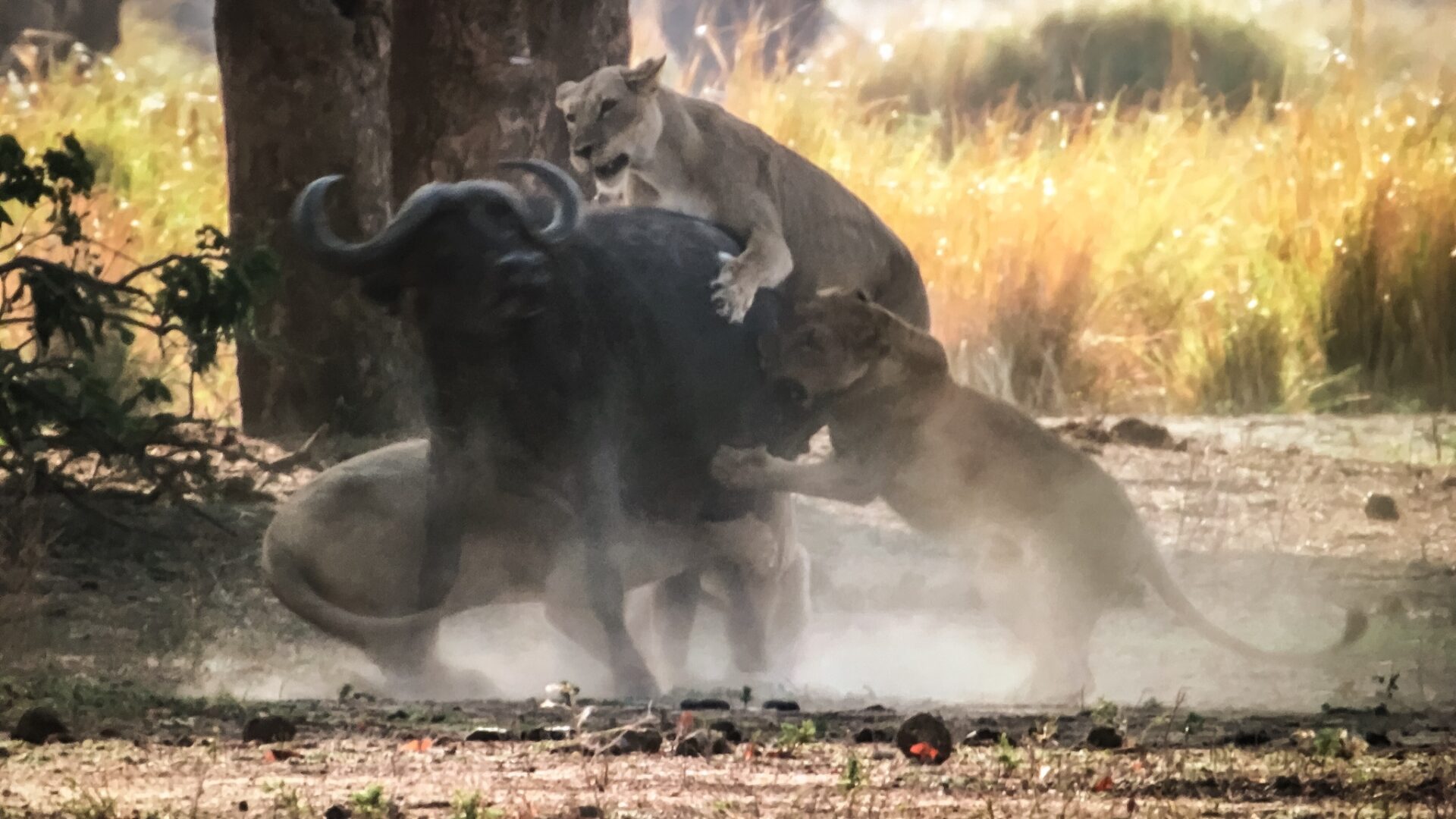
Notable behavior: Contrary to popular belief, lionesses do most of the hunting. They work cooperatively in coordinated groups, using sophisticated strategies to surround and ambush prey. Males, despite their impressive appearance, spend much of their day resting—sometimes up to 20 hours—conserving energy for defending territory and mating rights. When males do hunt, they typically target larger prey that require their additional strength.
Lions are primarily nocturnal, becoming active as temperatures drop in the evening. They hunt, patrol territory, and socialize during cooler night hours. During scorching days, the entire pride remains in shade, resting together in tight clusters. This behavior strengthens social bonds and keeps cubs safe from predators.
Lions once roamed across Africa and parts of Asia, from the Mediterranean coast to South Africa. Today, their range has contracted dramatically. iNaturalist data indicates lions are found throughout East and Southern Africa, with populations concentrated in Tanzania, Kenya, Botswana, Namibia, South Africa, and Uganda. A critically endangered population of fewer than 400 individuals persists in India’s Gir Forest, representing an isolated subspecies that has survived for centuries.
These apex predators thrive in open and semi-open habitats—savannas, grasslands, and open woodlands where prey is abundant and visibility is good. They avoid dense forests where hunting becomes difficult and prey species are less concentrated. Lions show remarkable adaptability, inhabiting everything from sea-level coastal plains to mountainous regions above 2,000 meters, though they prefer areas with reliable water sources and adequate prey populations.
Lions are obligate carnivores, requiring meat to survive. Their diet centers on large ungulates—zebras, wildebeest, buffalo, and various antelope species. A single lion requires approximately 7 kilograms of meat daily, though they eat opportunistically, consuming as much as 30 kilograms in a single feeding after a successful hunt. Lionesses coordinate hunts with precision, using terrain and group positioning to corner prey before delivering a killing bite to the throat or muzzle.
Hunting success rates vary dramatically by season and prey availability. During the dry season when prey concentrates around remaining water sources, lions feast regularly. In wet seasons when prey disperses widely, hunting becomes more challenging and less frequent. Lions also scavenge kills from other predators when opportunities arise, and males often commandeer kills made by females. This dietary flexibility, combined with their ability to survive weeks without food, makes them formidable survivors in variable African ecosystems.
Lion reproduction is tied to pride dynamics and male tenure. Females within a pride often synchronize their breeding cycles, coming into estrus simultaneously. When a receptive female enters estrus, lasting three to four days, she signals her readiness through vocalizations and scent marking. The resident pride male responds, and mating occurs repeatedly throughout the estrus period—up to 40 times daily.
After a gestation period of 108 days, females give birth to litters of 1 to 4 cubs in secluded dens. Lionesses are highly protective mothers, aggressively defending their young from any perceived threat. Cubs remain dependent for approximately two years, learning hunting skills through play and observation. Remarkably, females within a pride often nurse each other’s cubs communally, providing collective childcare that increases offspring survival rates.
Male cubs typically remain with their natal pride until adolescence, when they are forced out by adult males. These young males then wander as nomads, often forming coalitions with brothers or unrelated males, until they are strong enough to challenge and take over an established pride. This cycle of displacement and takeover is central to lion social structure and genetic diversity.
Lion populations have declined precipitously over the past century. Historical estimates suggest 200,000 lions roamed Africa in the early 1900s; today, fewer than 25,000 remain in the wild. The species is classified as Near Threatened by the IUCN, reflecting ongoing population declines across most of its range. The primary threats are habitat loss due to agricultural expansion and human settlement, declining prey populations from overhunting, and direct persecution by pastoralists protecting livestock.
Human-wildlife conflict represents a significant conservation challenge. As human populations expand into lion habitat, lions increasingly prey on domestic livestock, prompting retaliatory killings. In some regions, trophy hunting, though regulated, removes significant numbers of males and disrupts pride structure. Climate change exacerbates these pressures by altering prey migration patterns and reducing water availability during droughts.
Conservation note: Several protected areas and national parks across Africa—including the Serengeti, Kruger National Park, and various reserves in Botswana and Namibia—serve as critical strongholds for lion populations. International conservation efforts focus on establishing wildlife corridors, supporting community-based conservation initiatives, and reducing human-lion conflict through compensation programs and livestock protection measures. The Asiatic lion population in India’s Gir Forest, while small, has shown modest recovery through intensive protection, offering hope for species recovery when conservation efforts are prioritized.
A lion’s roar is the loudest call of any big cat, audible from up to 5 kilometers away and used to communicate across vast territories and attract mates.
Male lions’ manes serve as honest signals of health and genetic quality—darker, fuller manes indicate better nutrition, lower parasite loads, and higher testosterone levels, making them more attractive to females.
Lions are the only truly social cats; all other wild felids are solitary except during mating, making lion pride dynamics uniquely complex among carnivores.
A lion’s bite force reaches approximately 650 pounds per square inch, strong enough to crush bone and deliver a killing bite in seconds.
Female lions do 85-90% of the hunting in a pride, while males spend most of their time resting and defending territory—a reversal of the typical mammalian pattern where males are more active.
Lions can sleep up to 20 hours per day, conserving energy in the African heat and remaining ready for sudden bursts of activity.
A lion’s tongue is covered in backward-pointing barbs called papillae that help them rasp meat from bone and groom their fur with sandpaper-like efficiency.
Bauer, H., & Van der Merwe, S. (2004). Inventory of free-ranging lions in Africa. PLoS Medicine, 1(3), e133. https://doi.org/10.1371/journal.pmed.0010133
Riggio, J., Jacobson, A., Dollar, L., Bauer, H., Becker, M., Dickman, A., & Pimm, S. L. (2013). The size of savanna Africa: a lion’s (Panthera leo) perspective. Biodiversity and Conservation, 22(1), 17-35.
International Union for Conservation of Nature (IUCN) Red List. (2023). Panthera leo. Retrieved from https://www.iucnredlist.org/
Packer, C., Hilborn, R., Mosser, A., Sinclair, A. R., Hando, J., & Kissui, B. (2005). Ecological change, group territoriality, and population dynamics in Serengeti lions. PLoS Biology, 3(12), e420.
Schaller, G. B. (1972). The Serengeti Lion: A Study of Predator-Prey Relations. University of Chicago Press.