
Fungi
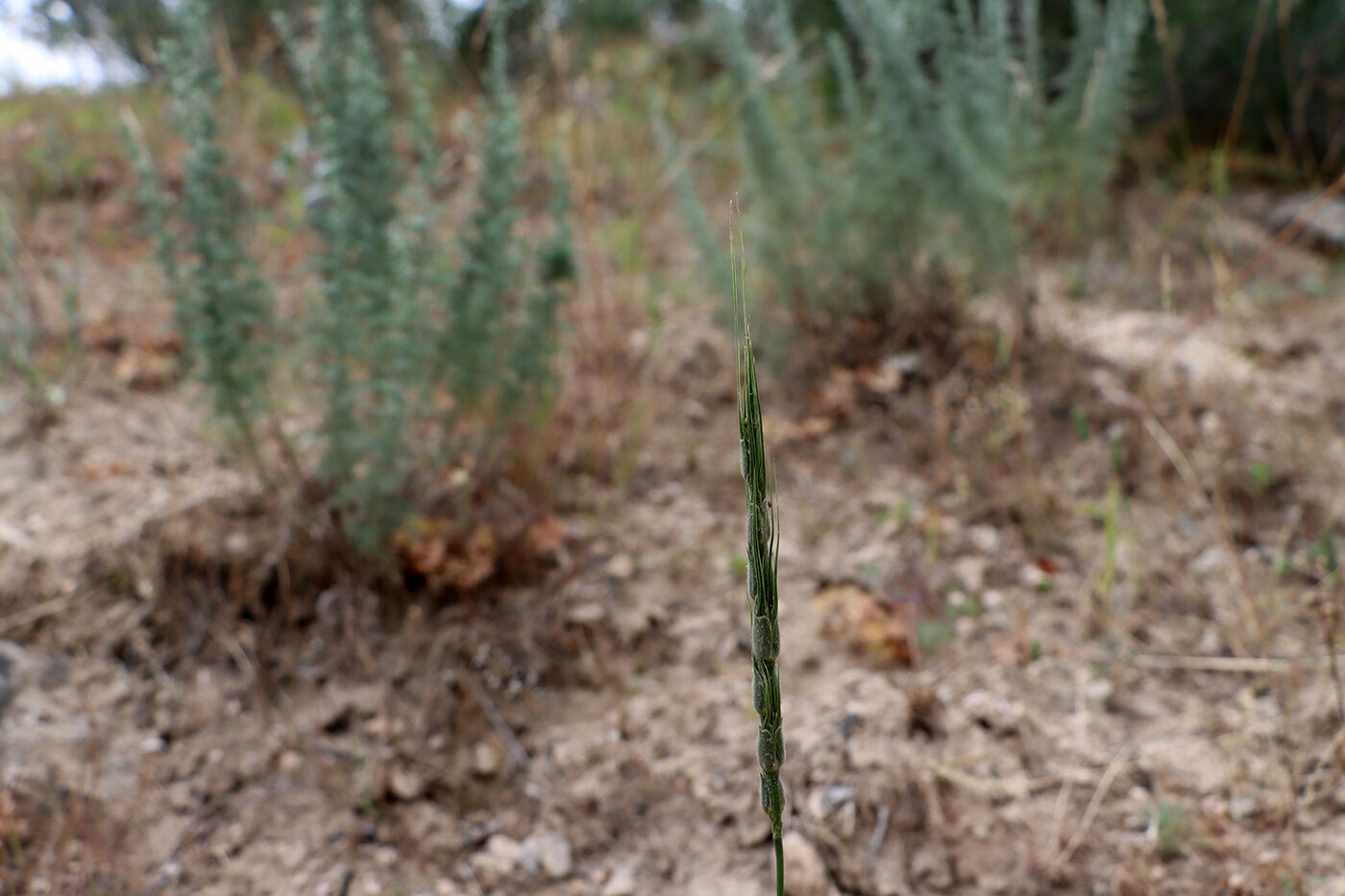
Aegilops crassa
| Kingdom | Plantae |
|---|---|
| Phylum | Tracheophyta |
| Class | Liliopsida |
| Order | Poales |
| Family | Poaceae |
| Genus | Aegilops |
| Species | Aegilops crassa |
Key metrics will appear once data is available.
Aegilops crassa, commonly known as Persian goatgrass, is a wild grass species native to the arid and semi-arid regions of western and central Asia. This member of the Poaceae family is classified as Least Concern by conservation authorities, reflecting its stable population status across its broad geographic range. GBIF records show the species occurs across 18 countries, with over 800 documented occurrences spanning from the Caucasus to North Africa and extending into North America.
The species inhabits dry grasslands and cultivated areas where it often grows as a weedy associate of agricultural fields. iNaturalist data indicates recent observations from Uzbekistan, Kyrgyzstan, Iran, and other Central Asian regions, with the most recent records from 2024 documenting its continued presence in traditional distribution areas. Its wide ecological tolerance and ability to thrive in marginal agricultural lands have allowed it to establish populations far beyond its native range.
Aegilops crassa is an annual or winter-annual grass that grows as a relatively compact plant with characteristic features typical of the genus. The species produces multiple tillers from the base, creating a bushy growth form. Its leaves are narrow and linear, with a somewhat rough texture on the upper surface, typical of wild grass species in arid environments.
The inflorescence is a distinctive spike with a thick, robust rachis (central axis). The spikelets are arranged alternately along the rachis and contain multiple florets. Each spikelet bears prominent awns—long, bristle-like extensions that extend from the lemma (the outer floral bract). These awns are often divergent and contribute to the plant’s overall spiky appearance, which aids in seed dispersal by adhering to animal fur and clothing.
Aegilops crassa follows a typical winter-annual growth cycle in its native range, germinating in autumn and developing through the cool season before flowering in spring. The plant establishes a shallow but extensive root system that enables it to access moisture from dry soils. Growth is relatively rapid once conditions are favorable, with the plant reaching reproductive maturity within a few months of germination.
The developmental timeline varies with local climate conditions. In regions with mild winters, plants may flower as early as April or May. In cooler areas or at higher elevations, flowering may be delayed until late spring or early summer. The species completes its lifecycle and sets seed within a single growing season, allowing it to persist in unpredictable environments through seed dormancy mechanisms.
GBIF records document Aegilops crassa across a vast geographic range extending from Central Asia through the Middle East and into southern Europe. The species is particularly abundant in Uzbekistan, Tajikistan, Kyrgyzstan, Iran, Afghanistan, and Turkey, with scattered populations recorded in Poland, Bulgaria, Canada, and the United States. The concentration of records in Central Asia and the Middle East reflects the species’ native distribution in this region.
The species thrives in open grasslands, steppe environments, and disturbed agricultural areas. It prefers well-drained soils and is highly adapted to arid and semi-arid climates with low annual rainfall. Aegilops crassa frequently occurs as a weed in cereal crop fields, particularly in wheat and barley cultivation areas, where it competes with cultivated species. Its presence in North America and Europe appears to be associated with grain trade routes and agricultural introductions rather than natural dispersal.
Aegilops crassa flowers in spring and early summer, with the exact timing dependent on latitude and elevation. The spike inflorescence develops over several weeks, with individual spikelets opening sequentially. The prominent awns facilitate wind pollination and contribute to the species’ reproductive strategy. The plant produces numerous seeds per spike, with each seed equipped with an awn that aids in passive dispersal.
Reproduction occurs exclusively through seed production. The seeds germinate readily under appropriate moisture conditions, typically in autumn in the species’ native range. The plant’s ability to produce viable seeds in diverse environmental conditions, combined with the effective dispersal mechanisms provided by the awned spikelets, has enabled Aegilops crassa to establish populations across multiple continents. Seed persistence in the soil provides a buffer against unfavorable years, allowing populations to recover when conditions improve.
As a wild grass species, Aegilops crassa has limited direct economic use. However, its presence in agricultural systems has drawn attention from crop researchers, as wild Aegilops species are known to hybridize with cultivated wheat and other cereals. These hybridizations have potential significance for plant breeding programs seeking to introduce genetic diversity or disease resistance traits from wild relatives into cultivated crops.
The species is not deliberately cultivated for ornamental or agricultural purposes. Its primary interaction with human agriculture is as a weed in grain fields, where it is typically controlled through mechanical removal or herbicide application. In some traditional farming systems, particularly in Central Asia, the plant may be tolerated as part of the natural vegetation mosaic in marginal agricultural lands.
Aegilops crassa is classified as Least Concern by the IUCN, indicating that the species faces no significant threats to its long-term survival. The species’ wide geographic distribution, large population size, and ability to thrive in disturbed habitats provide considerable protection against extinction risk. Its presence across multiple countries and diverse ecological contexts ensures that no single threat could substantially reduce global population numbers.
The species’ stable conservation status reflects its ecological adaptability and the absence of targeted harvesting or habitat destruction that would specifically threaten its survival. However, intensive agricultural practices that eliminate marginal lands and uncultivated areas may locally reduce populations in some regions. The species’ ability to persist as a weed in cultivated areas provides an alternative habitat that partially compensates for the loss of natural grassland ecosystems in some regions.
The genus Aegilops comprises wild relatives of wheat, and several species have contributed genes to cultivated wheat through both ancient hybridization events and modern plant breeding programs.
The prominent awns of Aegilops crassa can reach several centimeters in length and are covered with fine barbs that allow seeds to mechanically burrow into soil and animal fur for dispersal.
Aegilops crassa has established naturalized populations in California and other parts of North America, likely arriving as a contaminant in imported grain seeds during the 19th and 20th centuries.
The species name “crassa” refers to the thick or robust nature of the plant’s rachis (the central spike axis), distinguishing it from related species with more delicate inflorescences.
In its native Central Asian range, Aegilops crassa often grows alongside other wild grass species, contributing to the botanical diversity of traditional steppe and grassland ecosystems.
The plant’s winter-annual lifecycle is an adaptation to continental climates with cold winters and dry summers, allowing it to complete growth during the cooler, wetter season.
Wild Aegilops species like A. crassa are considered valuable genetic resources by agricultural researchers, as they may carry traits for drought tolerance, disease resistance, and nutritional quality that could benefit future wheat breeding.