Animals
Home »
Micropterus henshalli
| Kingdom | Animalia |
|---|---|
| Phylum | Chordata |
| Order | Perciformes |
| Family | Centrarchidae |
| Genus | Micropterus |
| Species | Micropterus henshalli |
Key metrics will appear once data is available.
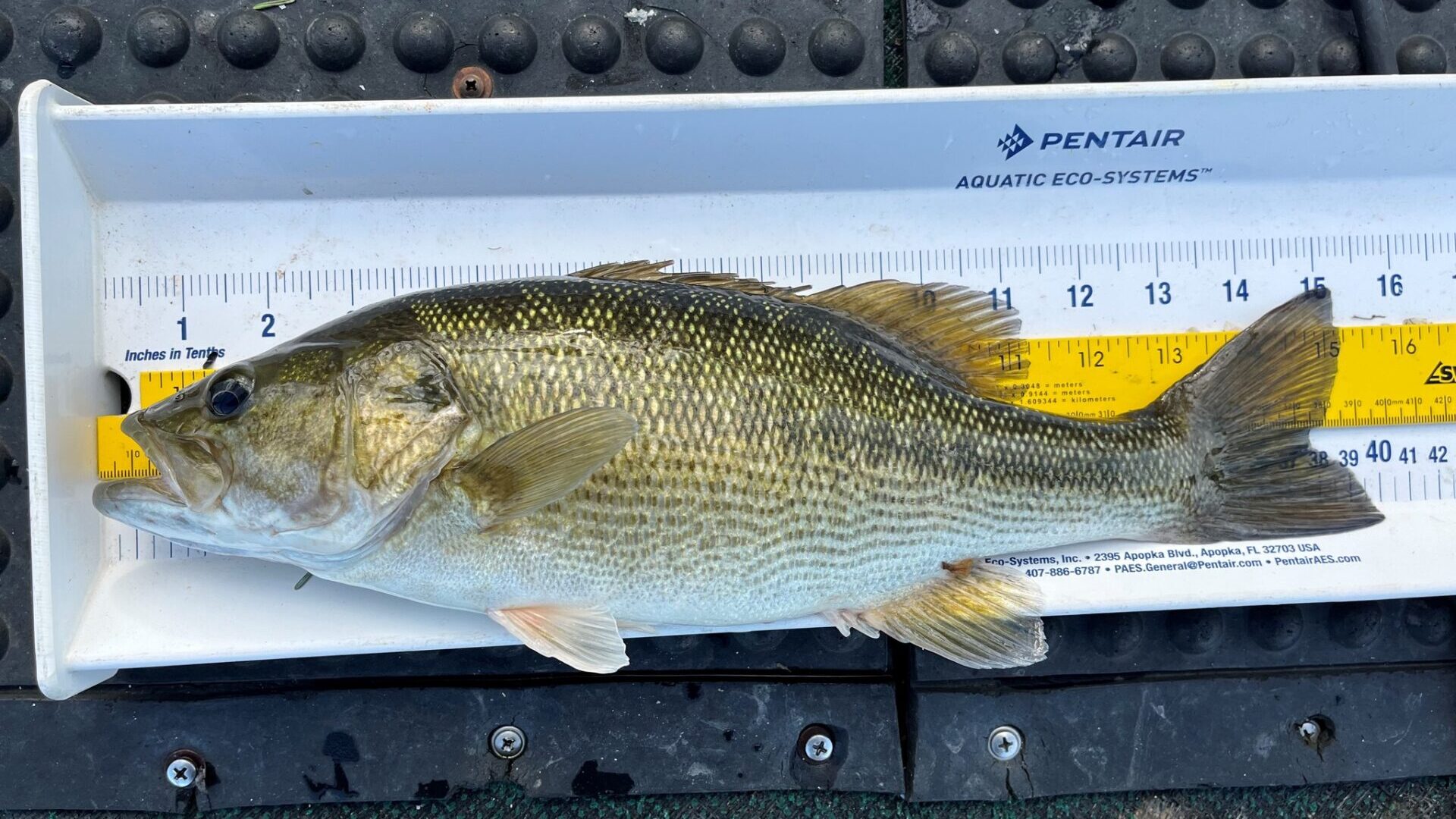
Micropterus henshalli, commonly known as the Alabama bass, is a freshwater fish species native to the southeastern United States. This black bass inhabits clear streams and rivers where it actively hunts small fish and aquatic prey. The species was formally described by Hubbs and Bailey in 1940 and belongs to the sunfish family Centrarchidae, which includes many of North America’s most important sport and forage fishes.
The Alabama bass is a predatory fish that plays an important ecological role in freshwater ecosystems across its native range. iNaturalist data indicates the species has been documented at over 1,100 locations throughout the United States, with recent observations concentrated in Alabama, Georgia, California, Mississippi, and the Carolinas. The species thrives in clear, flowing waters where adequate habitat and prey availability support healthy populations.
The Alabama bass is a member of the black bass group within the Centrarchidae family. Like other members of the genus Micropterus, it exhibits the characteristic body shape and coloration typical of black basses, with a streamlined form adapted for hunting in freshwater environments. The species is difficult to distinguish from closely related black bass species without careful examination of specific anatomical features.
Little is documented about the precise size range and specific morphological features that distinguish this species from congeners. The fish exhibits the general appearance of a black bass with appropriate coloration for its freshwater habitat.
The Alabama bass is an active predator that hunts in freshwater streams and rivers. As a member of the black bass family, it likely exhibits behaviors typical of its genus, including hunting small fish and invertebrates in flowing water environments. The species appears to be most active during daylight hours when prey availability is greatest.
The species inhabits clear freshwater systems where it can effectively hunt and avoid predators. Recent observations from iNaturalist show that the Alabama bass continues to be regularly documented in its native range, suggesting stable populations in suitable habitats.
The Alabama bass is endemic to the southeastern United States. GBIF records show the species is distributed across multiple states including Alabama, Georgia, California, Mississippi, North Carolina, South Carolina, Virginia, Tennessee, Kentucky, and Arkansas. The species has been introduced to California, where it now maintains established populations in several water systems. With over 1,100 documented occurrences, the species demonstrates a substantial presence across its range.
The Alabama bass inhabits freshwater ecosystems, preferring clear streams and rivers with adequate flow and habitat structure. The species thrives in environments with rocky substrates and moderate current that provide both hunting grounds and shelter. Its presence in California represents a range expansion from its native southeastern distribution, likely resulting from bait bucket introductions or deliberate stocking.
Little is documented about the vocalization behavior of the Alabama bass. Like other black bass species, it likely relies primarily on visual and chemical communication rather than acoustic signals. The species may produce sounds during aggressive interactions or spawning activities, but detailed information about these behaviors is not currently available.
The Alabama bass is a carnivorous predator that feeds on small fish and aquatic invertebrates available in freshwater environments. As a member of the black bass genus, it actively hunts prey items proportional to its size. The species likely exhibits feeding behavior typical of black basses, with increased feeding activity during warmer months when prey abundance peaks.
The predatory habits of the Alabama bass make it an important consumer in freshwater food webs. Its diet helps regulate populations of smaller fish species and aquatic invertebrates within its ecosystem.
Little is currently documented about the specific reproductive behavior and breeding cycle of the Alabama bass. Like other black bass species, it likely undergoes seasonal breeding tied to water temperature increases in spring. The species probably constructs nests in suitable freshwater habitat where males guard eggs and young until they are capable of independent survival.
The breeding behavior of the Alabama bass likely follows patterns established by closely related black bass species, with males assuming primary responsibility for brood care. The timing of spawning probably coincides with warming water temperatures in late spring across its southeastern range.
The Alabama bass population trend is currently unknown. The species appears to maintain populations across much of its native southeastern range, with recent observations indicating continued presence in Alabama, Georgia, Mississippi, and surrounding states. The species has also become established in California, expanding its overall distribution beyond its native range.
No specific conservation status has been formally assigned to the Alabama bass. The species does not appear to face immediate threats across most of its range, though habitat degradation in some freshwater systems could potentially impact local populations. The introduction of the species to non-native ranges like California may have ecological implications for those ecosystems, as introduced bass species can compete with native fish and alter community structure.