Animals
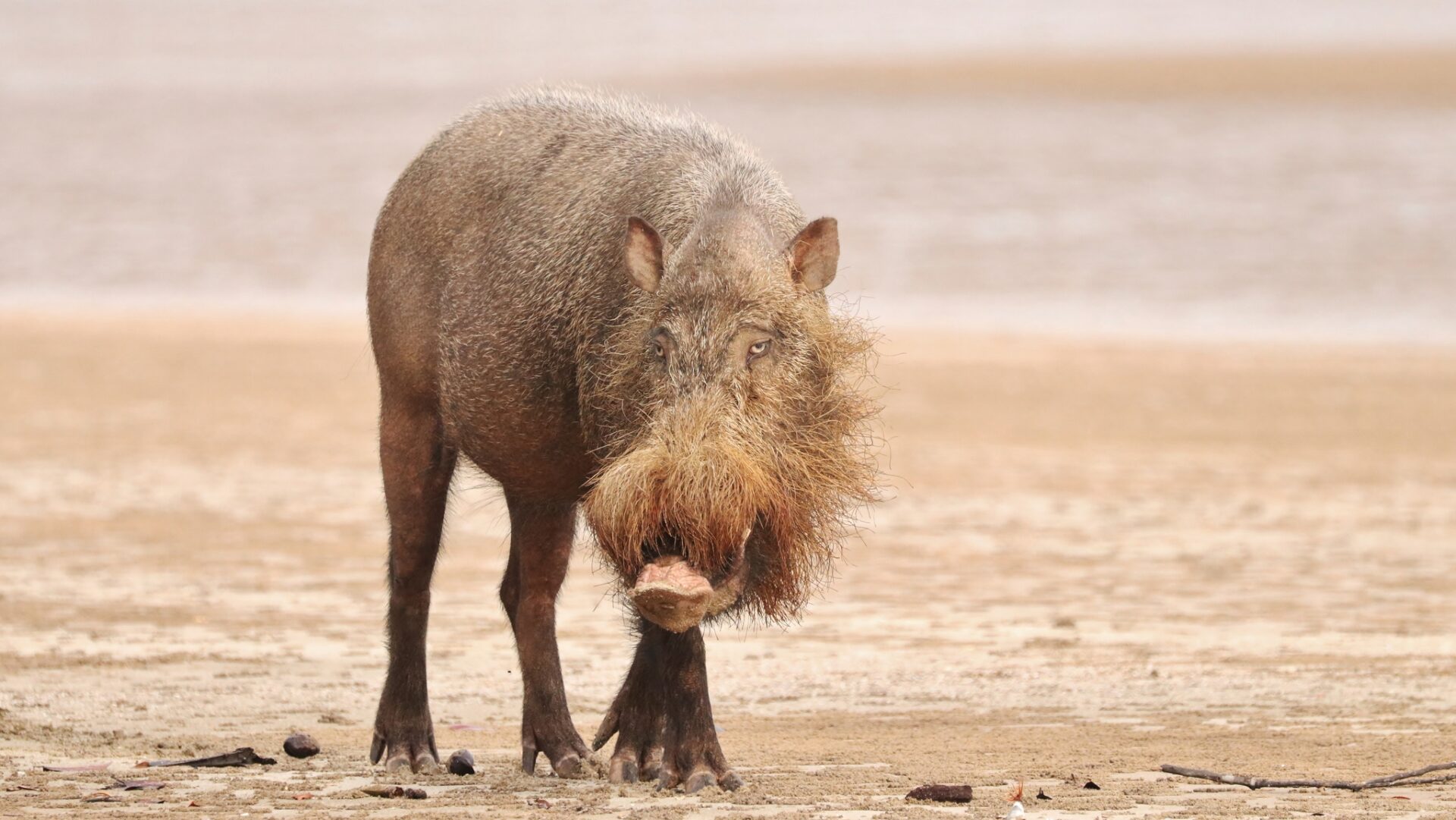
Sus barbatus, the bearded pig, is a wild boar inhabiting the tropical forests of Southeast Asia. This nocturnal and crepuscular animal is most active during late afternoon and nighttime hours, when it forages across the forest floor. iNaturalist data indicates ongoing observations throughout its range, confirming the species’ presence in current forest ecosystems.
The common name reflects one of the animal’s most distinctive features: the long bristles covering its head and body. The species belongs to the family Suidae and genus Sus, sharing evolutionary ties with other Asian wild boars. Its gestation period of 4 months follows the typical reproductive pattern of regional suid species.
The bearded pig is distinguished by striking physical characteristics. Its robust body is covered in thick, coarse hair, particularly pronounced around the head and neck where the characteristic beard develops. These bristles give the animal an imposing, recognizable appearance in its natural habitat.
The coat typically ranges from dark brown to black, with a rough texture suited to dense forest life. Its facial features include a powerful snout and well-developed tusks, essential tools for rooting and defense. The overall morphology reflects perfect adaptation to humid tropical forest environments.
The bearded pig is primarily solitary or lives in small family groups. Its nocturnal and crepuscular behavior allows efficient exploration of its territory while avoiding the hottest daylight hours. This activity pattern represents an important adaptation to equatorial tropical forest conditions.
The animal is an active rooter, using its powerful snout to overturn soil and unearth hidden food resources. Its wandering lifestyle drives it to cover significant distances each night, creating well-marked trails through the forest. Its interactions with the environment play an important ecological role in soil modification and aeration.
The bearded pig occupies a restricted range in insular Southeast Asia. GBIF records document its presence in Malaysia, Indonesia, and Brunei Darussalam, with a total of 1,028 recorded occurrences. Observations concentrate particularly in Sarawak, Malaysia, where the majority of records have been collected.
The species inhabits only dense tropical forests and wooded areas, where it finds the humidity and vegetation cover necessary for survival. Primary and secondary forests in equatorial regions constitute its preferred habitat. The species depends heavily on the integrity of these forest ecosystems to maintain viable populations.
The bearded pig is an opportunistic omnivore, feeding on a wide variety of resources available in tropical forests. Its rooting habits allow access to tubers, roots, and soil invertebrates, which form the basis of its diet. This capacity to exploit underground resources provides a nutritional advantage in densely forested environments.
The animal supplements its diet with fruits, seeds, and plant matter found on the forest floor or in leaf litter. Its role as a consumer is important for seed dispersal and modification of forest soil structure. Its rooting activities indirectly benefit other species by exposing underground resources.
The bearded pig possesses a reproductive cycle adapted to the seasonal conditions of tropical forests. The documented gestation period of 4 months allows females to produce litters synchronized with food availability. This reproductive synchronization increases the survival chances of young in an unpredictable environment.
Females demonstrate protective maternal behavior, raising piglets in sheltered areas of dense forest. Young remain with their mother for several months, learning essential foraging techniques and territorial navigation. This extended learning period prepares young boars for adult life in tropical forests.
The social structure of breeding groups remains largely solitary, with males and females meeting primarily during the breeding season. Males may display aggressive territorial behavior to access females in estrus. This minimal social organization represents an efficient resource utilization strategy in habitats where food is dispersed.
The bearded pig is currently classified as Near Threatened (NT) under IUCN criteria. This classification reflects growing concerns about habitat loss and hunting pressure. iNaturalist data show a total of 803 observations, with recent records confirming the species’ persistence in its historical range.
Fragmentation of tropical forests represents the major threat to this species, reducing the extent and connectivity of its habitat. Hunting for bushmeat and conflicts with agricultural activities further aggravate population decline. Protected areas and forest conservation initiatives remain essential for ensuring the long-term survival of the bearded pig.
Conservation efforts must focus on protecting intact forests and creating ecological corridors linking fragmented populations. Continued research on population dynamics and the species’ ecology will provide crucial data for refining conservation strategies. Local community participation in sustainable forest resource management also represents a key element of conservation success.